
The Role of Shame in Skin Picking and Hair Pulling
If you struggle with skin picking or hair pulling, you may know the cycle all too well: an urge builds, you pick or pull, you experience temporary relief, and then shame or guilt sets in. For many people with body-focused repetitive behaviors (BFRBs), the emotional impact can be just as difficult as the behavior itself.
Skin picking disorder (excoriation disorder) and hair pulling disorder (trichotillomania) are real and treatable conditions. Yet shame often prevents people from seeking the support they need. Understanding the connection between shame and BFRBs can be an important first step toward breaking the cycle.
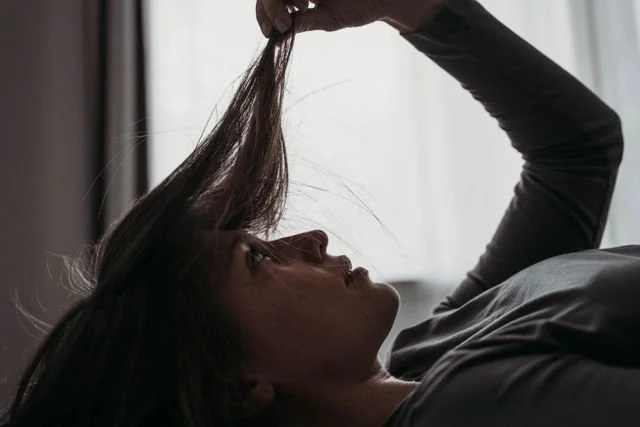
Why Do Skin Picking and Hair Pulling Cause Shame?
People often feel ashamed because they believe they should be able to control their behavior. You may find yourself thinking:
“Why can’t I just stop?”
“What’s wrong with me?”
“What if someone notices?”
These thoughts can be especially painful when picking or pulling has caused visible changes, such as scabs, sores, skin damage, thinning hair, bald spots, or changes to the eyebrows or eyelashes.
As shame increases, you may begin avoiding situations where others could notice. You might wear certain clothing to cover your skin, change your hairstyle, avoid photographs, limit social activities, or spend considerable time trying to conceal areas affected by picking or pulling.
Unfortunately, avoidance can make shame feel even stronger.
How Shame Can Reinforce the BFRB Cycle
Shame is more than an uncomfortable feeling. It can actually become part of the cycle that maintains skin picking and hair pulling.
A person may experience an urge to pick or pull, engage in the behavior, and then feel temporary relief or satisfaction. That relief can be followed by embarrassment, guilt, or harsh self-criticism. The resulting emotional distress may then increase vulnerability to future urges.
The cycle usually looks like this: Urge → Picking or Pulling → Temporary Relief → Shame → Distress → More Urges
Recognizing this cycle can help you approach your BFRB with curiosity rather than judgment.
Why “Just Stopping” Doesn’t Work
People with BFRBs are frequently told to simply stop picking their skin or pulling their hair. While the advice may sound straightforward, BFRBs are rarely that simple.
Some behaviors happen automatically, sometimes without the person realizing they are picking or pulling. Others are more focused and occur in response to an urge, uncomfortable sensation, emotion, or perceived imperfection.
Skin picking and hair pulling can also serve different functions. For some people, the behavior may be self-soothing by temporarily reducing anxiety or tension. For others, it may provide sensory stimulation, help with boredom, or create a feeling of satisfaction.
This is one reason effective BFRB treatment focuses on understanding and becoming more aware of the individual pattern rather than relying on willpower alone.
Treatment for Skin Picking and Trichotillomania
Anxiety & OCD Therapy of Maryland uses evidence-based behavioral approaches that can help people understand and manage BFRBs. These include Habit Reversal Training (HRT) and Comprehensive Behavioral Intervention for BFRBs (ComB). These treatments involve identifying triggers, increasing awareness of urges and automatic behaviors, developing competing responses, modifying environmental factors, and learning new ways to respond to uncomfortable emotions and sensations.
An important part of treatment is also addressing the underlying shame surrounding the behavior. Instead of thinking, “I’m so weak, I should be able to control this,” therapy can help you move toward a more compassionate response: “I’m struggling with a behavior, and I can learn new ways of dealing with it.”
You Are Not Defined By Your BFRB
Skin picking and hair pulling do not mean that you are weak, vain, lacking self-control, or broken. BFRBs are genuine mental health conditions, and having one does not define who you are.
If shame has prevented you from seeking BFRB treatment, you are not alone. Anxiety & OCD Therapy of Maryland specializes in BFRBs and the evidence-based therapies that work. You do not have to wait until the behavior becomes “bad enough” to ask for help. Reaching out can be the first step toward the change you’ve been looking for.