Phobia Therapy
online throughout Maryland
Are Feelings Of Intense Fear Getting In The Way Of Enjoying Life To The Fullest?

Is your life regularly disrupted by a fear or phobia?
Do you go to great lengths to avoid being “triggered” by certain objects, activities, or situations?
Are the symptoms of your phobia getting worse over time?
If you are living with a phobia, then you’re probably familiar with the physical symptoms of panic that occur when faced with your fears. Rapid heart rate, dizziness, sweating, and intense feelings of doom are some common physical symptoms—as is the urge to flee or the feeling of being out of control.
Of course, these symptoms can significantly impact your relationships and ability to fully engage with what life has to offer. Though you may understand your fear is irrational on a cognitive level, you nevertheless can’t shake its grip on your life. This makes the cycle of fear all the more frustrating and difficult to escape.
Phobia treatment is about making your fears manageable rather than avoiding them. Working together in therapy, you can rewire your response to feelings of fear, panic, and overwhelm.
Have a question? Send me a message
Phobias Are Intense Fears Of Certain Objects, Places, Situations, Or Activities—And You Are Not Alone If You Have One

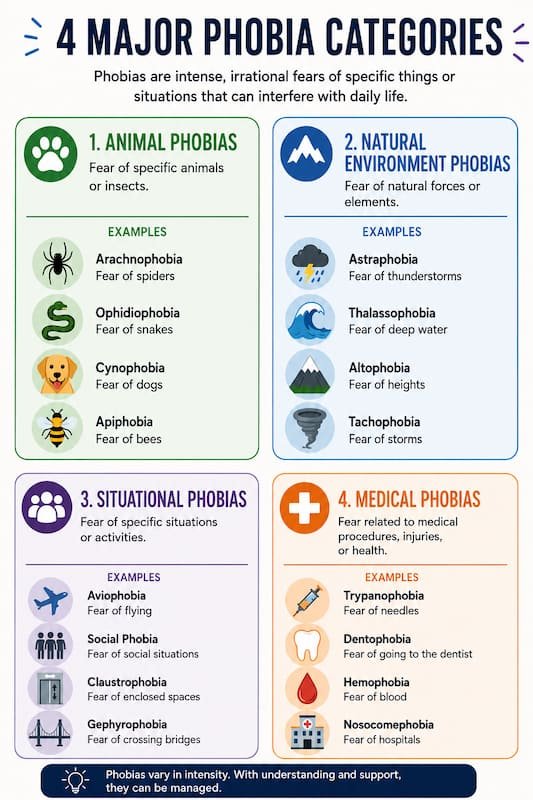
“Phobia” derives from the Greek term phobos, meaning “fear.” Some of the phobias I treat in therapy are:
Claustrophobia (fear of enclosed spaces)
Aerophobia (fear of air travel)
Trypanophobia (fear of needles)
Cynophobia (fear of dogs)
Acrophobia (fear of heights)
Emetophobia (fear of vomiting)
Glossophobia (fear of public speaking)
Hemophobia (fear of blood)
Amaxophobia (fear of driving)
Gephyrophobia (fear of bridges)
These are a few examples of common phobias, but there are many different types.
Where Do Phobias Come From?
In some cases, there are clear origins of a phobia. Sometimes, a highly traumatic or stressful experience triggers a deep fear of all related experiences (for example, getting attacked by a dog at an early age may cause the brain to inadvertently associate all dogs with danger).
In other instances, individuals may be exposed to a certain phobia by observing a family member with that same fear. Genetics also play a role, as phobias often run in families. Whatever the case may be, it’s important to remember that your phobia is not your fault.
Therapy is not so much about exploring what caused the phobia or analyzing the “why” behind it, but instead focusing on what your life would look like when it’s not controlled by fear—and how to get there.
Phobia Treatment Is Available Through Anxiety & OCD Therapy Of Maryland
In counseling, we won’t put your phobia under a microscope to figure out the “why,” as this actually fuels the fear even more. Rather, we will identify what your “light at the end of the tunnel” is and use that to motivate you towards lasting growth and change. This goal may involve doing something you’ve avoided, been afraid to do, or haven’t been able to imagine when living with your fear.

Why My Treatment Approach Works
My approach as a therapist is specifically focused on anxiety, phobias, and OCD-related behaviors, as many of the same tools can be used to treat all three. These therapies are designed to rewire the brain’s response to fear and include:
Exposure Therapy to gently expose you to your phobia in the contained space of counseling, desensitizing the fear in a way that helps your brain detect the difference between perceived threats and threats that are actually dangerous.
Cognitive Behavioral Therapy (CBT) is used alongside Exposure Therapy to foster skills for identifying fear-producing thoughts and challenging those thoughts.
Fear is a natural and valid human response, so the goal of therapy is not to completely eliminate feelings of fear from your life; that would be unrealistic and likely just make your phobia worse. However, it is possible to learn how to manage the brain’s stress response and escape the phobia cycle using counseling methods that can transform your quality of life.
The combination of Exposure Therapy and CBT is a proven treatment for phobias. While fear is just your brain’s way of protecting you, there are other ways to live. With the right approach and support, you can unlearn your automatic responses to create a life where your phobia is no longer holding you back.
Frequently Asked Questions About Therapy For Phobias
What if I’m worried my phobia is so overwhelming that I won’t be able to tolerate Exposure Therapy?
I understand this concern, and I assure you that I will never pressure you to do something you aren’t ready for in therapy. Exposure is always a gradual and collaborative process, desensitizing your fears step by step.
If you’re still unsure, I encourage you to think about Exposure Therapy as if you were learning to swim. You won’t be pushed into the deep end right away; rather, you will start by dipping your toe in shallow water as you become increasingly confident and acclimated to the pool.
Can counseling help even if I’ve had my phobia for a long time?
It may not feel like it right now, but your brain is extremely flexible, and your thought patterns can be changed. Our brains have neuroplasticity, which means they can rewire their neural pathways and make new connections based on updated thoughts and patterns.
No matter how long you’ve struggled with your phobia, your brain is always capable of engaging in this process with the help of a therapist. The combination of Exposure Therapy and CBT is the roadmap to making these kinds of changes happen.
Is online phobia treatment as effective as in-person therapy?
Yes. Exposure Therapy and CBT have the same results whether sessions are done virtually or in person. And in some cases, online therapy is slightly more effective for exposure treatment since the home environment is often where feelings of fear, panic, and avoidance are strongest.
My approach to therapy is highly structured, which makes it particularly easy to implement in an online format.
You Can Learn To Manage Your Fears
Anxiety & OCD Therapy of Maryland specializes in treatment for phobias of all kinds, using Exposure Therapy and Cognitive Behavioral Therapy (CBT). For more information or to schedule a session, contact me.
Serving clients virtually in Maryland